
LGD-4033 is sold by SARMs Store strictly as a research compound. Nothing on this page is medical advice or an instruction for human use.
LGD-4033, usually called Ligandrol and later coded VK5211 by Viking Therapeutics, is the second most clinically documented selective androgen receptor modulator after Ostarine. It has completed a phase I safety study in healthy men and a phase II trial in patients recovering from hip fracture, which puts it in a small group of SARMs with any human data at all.
It is also widely misunderstood, because the potency figures quoted in forum posts rarely match the doses used in the published work. This guide sets out the research record, the reported side effects, the UK legal position in 2026 and how to judge a supplier.
What LGD-4033 is
In short: LGD-4033 (Ligandrol) is a non-steroidal selective androgen receptor modulator first developed by Ligand Pharmaceuticals. It has been tested in one phase I and one phase II human trial and has never been licensed as a medicine.
Ligandrol is a non-steroidal SARM originally developed by Ligand Pharmaceuticals and later licensed to Viking Therapeutics. Like Ostarine it binds the androgen receptor and behaves as a tissue-selective agonist, producing anabolic activity in skeletal muscle and bone while showing much weaker activity in the prostate in preclinical models. It is orally available, and the phase I data put its half-life at roughly 24 to 36 hours.
LGD-4033 is not a steroid. It is not aromatised to oestrogen and not converted to dihydrotestosterone, so the oestrogenic and strongly androgenic effects associated with testosterone esters are absent from the published data. It is, however, considerably more potent per milligram than Ostarine, and the clinical doses that produced measurable changes in lean mass were an order of magnitude lower than the amounts commonly sold as research material. That gap is the single most useful thing to understand about the compound.
Ligandrol, LGD4033 and VK5211: the names
In short: Ligandrol, LGD-4033, LGD4033 and VK5211 are all names for the same molecule.
The compound is written LGD-4033, LGD4033 and LGD 4033, and is usually called Ligandrol, an informal name rather than an approved one. VK5211 is the code Viking Therapeutics gave the same molecule when it took it into the hip fracture trial. Searches for "ligandrol" and "lgd-4033" are looking for one compound, and a certificate of analysis may use either name.
What the research found
In short: Two human studies exist: a 21 day phase I trial in 76 healthy men and a 12 week phase II trial in 108 hip fracture patients. Both recorded dose-dependent gains in lean mass, and the phase I trial also recorded dose-dependent falls in testosterone and HDL cholesterol.
Phase I, healthy young men (Basaria and colleagues, Journals of Gerontology Series A: Biological Sciences and Medical Sciences, 2013). This is the foundational human study. Seventy-six healthy men aged 21 to 50 received placebo or 0.1 mg, 0.3 mg or 1 mg of LGD-4033 daily for 21 days. Lean body mass increased in a dose-dependent way, with the 1 mg group gaining roughly 1.2 kg over three weeks, a notable figure given the very short duration.
Fat mass did not change significantly. The compound was described as well tolerated, with no serious adverse events and no clinically meaningful rise in liver enzymes. Total testosterone, free testosterone, sex hormone binding globulin, follicle stimulating hormone and HDL cholesterol all fell in a dose-dependent manner, and all returned towards baseline during follow-up. Exposure was linear and dose-proportional.
Phase II, hip fracture recovery (Viking Therapeutics VK5211, reported 2018). A twelve-week randomised, placebo-controlled trial in 108 older patients recovering from hip fracture surgery tested daily doses of 0.5 mg, 1 mg and 2 mg.
Lean body mass rose in a dose-dependent way, by 4.8, 7.2 and 9.1 per cent relative to placebo, and fat mass fell, significantly only at the top dose. Six-minute walk distance improved by about 22 metres over placebo at the top dose, an exploratory endpoint the study was not powered to test, and the company reported no drug-related serious adverse events.
Twelve weeks after dosing stopped, lean mass was still above placebo but no longer significantly so. These results were released by the company and presented at the ASBMR 2018 meeting rather than published in full in a peer-reviewed journal, which is why they carry less weight than the phase I paper. They also mirror what happened with Ostarine in phase III: SARMs have repeatedly added mass more reliably than they have improved measured performance.
Beyond those two studies the human record is thin. There is no long-term trial, no study in trained young men pursuing muscle gain, and no data at the higher amounts sold as research chemicals. Anything claiming specific results outside these trials is anecdote, not evidence.
Side effects reported
In short: In the trials the main effects were suppression of testosterone and related hormones and a fall in HDL cholesterol, with no meaningful rise in liver enzymes. Outside the trials, case reports describe liver injury linked to products sold as LGD-4033.
The phase I trial gives the clearest picture. Suppression of total and free testosterone was dose-dependent and consistent, along with reductions in sex hormone binding globulin and follicle stimulating hormone, and recovery occurred during follow-up. HDL cholesterol fell. Liver enzymes did not rise meaningfully at the trial doses.
Outside the trials the picture is different. Several published case reports and case series describe drug-induced liver injury in people who had taken bodybuilding products sold as LGD-4033, typically a cholestatic or mixed pattern of jaundice weeks into use. In a number of these the product was taken at doses far above anything studied, and in some cases analysis found undeclared or substituted ingredients. That combination, unstudied doses plus unverified material, is the recurring theme in SARM-related harm, and the strongest practical argument for buying only batch-tested product.
LGD-4033 compared with other compounds
In short: LGD-4033 is more potent per milligram than Ostarine and suppressed hormones more at its studied doses, while Ostarine has the larger human record.
Against Ostarine, LGD-4033 is markedly more potent per milligram and produced greater hormonal suppression at its studied doses, while Ostarine holds the larger human safety record and the only phase III data. RAD-140 is more potent again in animal models and carries a liver signal in its limited human exposure. YK-11 and S-23 have no human data, so no meaningful safety comparison is possible. Cardarine and Stenabolic are not SARMs and belong in a separate category despite being sold alongside.
| Compound | Highest human evidence | Main caution in the literature |
|---|---|---|
| LGD-4033 | Phase I in 76 healthy men; phase II in 108 hip fracture patients | Dose-dependent hormone suppression; case reports of liver injury |
| Ostarine | Phase III in cancer cachexia | Hormone suppression; functional endpoints not consistently met |
| RAD-140 | Phase I in breast cancer | Raised liver enzymes in its only human trial |
| YK-11 | None; cell and rodent studies only | Rat studies report hippocampal oxidative stress |
| S-23 | None; rodent studies only | Strong hormone suppression in rats |
Legal status in the UK, 2026
In short: LGD-4033 is not a controlled drug in the UK, but it is an unlicensed medicine if sold or advertised for human use, so it is sold only as a research compound. It is banned in sport at all times.
LGD-4033 is not a controlled substance under the Misuse of Drugs Act 1971 and is not scheduled as a Class C anabolic steroid. Under the Human Medicines Regulations 2012 it is treated as an unlicensed medicinal product if it is sold, advertised or supplied for human use, and the MHRA has enforced against UK sellers who cross that line.
That is why legitimate UK suppliers list it strictly as a research compound and carry a research-only notice. In sport it is prohibited at all times by WADA as an “other anabolic agent” under section S1.2, and it has appeared in a number of anti-doping cases, including several attributed to contaminated supplements. UK Anti-Doping applies the same list.
The best known contamination case is that of the UFC fighter Nate Diaz, whose 2019 trace finding for LGD-4033 was traced to a contaminated multivitamin, with no sanction. Our guide to that case explains why strict liability makes batch testing the deciding factor for anyone in a tested sport.
How to check a supplier
In short: Look for a certificate of analysis that matches the batch number on the bottle and confirms identity and purity.
Ask for the certificate of analysis for the specific batch on the bottle, not a generic example document. It should identify the compound by HPLC or LC-MS, state a purity percentage, and carry a batch number you can match to the label. The label itself should show compound name, milligrams per capsule, capsule count, batch number and a research-only notice.
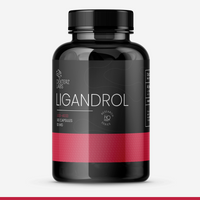
UK manufacturing shortens the supply chain and makes the testing claim verifiable. Dexterz Labs Ligandrol LGD-4033 is made in the UK at 10 mg per capsule, 90 capsules per bottle, and every batch is independently tested with its certificate of analysis published on the product page.
Frequently asked questions
Is LGD-4033 stronger than Ostarine? In animal models and on a per-milligram basis, yes, and the phase I data show greater hormonal suppression than Ostarine produced at its trial doses.
Does LGD-4033 suppress testosterone? Yes. The phase I study recorded dose-dependent falls in total testosterone, free testosterone, sex hormone binding globulin and follicle stimulating hormone, reversing after dosing stopped.
Is LGD-4033 liver toxic? The 21-day phase I trial found no meaningful rise in liver enzymes at up to 1 mg daily. Published case reports of liver injury involve products sold for bodybuilding use at far higher amounts, sometimes containing undeclared compounds.
What is VK5211? It is the development code Viking Therapeutics used for LGD-4033 in the hip fracture programme. Same molecule.
How long does LGD-4033 stay detectable? It and its metabolites are detectable in urine well beyond the dosing period, and it is routinely screened for in anti-doping testing.
Is LGD-4033 legal in the UK in 2026? It is legal to buy and possess as a research compound. Selling or advertising it for human consumption is not lawful, and it is banned in sport.
Is Ligandrol the same as LGD-4033? Yes. Ligandrol is the informal name, LGD-4033 the development code, and VK5211 the code Viking Therapeutics used for the same molecule.
Is LGD-4033 a steroid? No. It is a non-steroidal SARM. It is not aromatised to oestrogen and not converted to dihydrotestosterone.
Is LGD-4033 available on prescription in the UK? No. It has never been licensed as a medicine in the UK or anywhere else, so it cannot be prescribed.
What did the VK5211 hip fracture trial find? Over 12 weeks in 108 older patients, lean body mass rose by 4.8 to 9.1 per cent relative to placebo across the three doses. The results were released by the company and presented at a conference rather than published in full in a journal.
Related reading
- Ostarine (MK-2866): the complete research guide
- RAD-140 (Testolone): what the studies show
- Are SARMs legal in the UK? 2026 update
- Third-party testing: how to read a certificate of analysis
- Browse the range: SARMs UK
Research product: Dexterz Labs Ligandrol LGD-4033 10 mg, 90 capsules
Related peptides in the research
Readers comparing SARMs with the peptide literature usually turn to the tissue-repair peptides next: BPC-157 and TB-500, both studied in rodent tendon, ligament and wound models, and the two together in the Wolverine blend. For how the two classes differ in mechanism, evidence and storage, read SARMs vs peptides. See all Origin Peptides research peptides.
Sources
Primary papers and official guidance cited in this guide, linked so each one can be checked directly.
- Basaria S et al., J Gerontol A Biol Sci Med Sci 2013;68:87-95. PubMed 22459616
- Viking Therapeutics, VK5211 phase II results in patients recovering from hip fracture, ASBMR 2018 annual meeting and company release, 1 October 2018.
- Flores JE et al., Hepatol Commun 2020;4:450-452 (SARM-associated drug-induced liver injury). PubMed 32140660
- WADA Prohibited List 2026.
- Viking Therapeutics Presents Results from Phase 2 Study of VK5211 in Patients Recovering from Hip Fracture in Plenary Oral Presentation at ASBMR 2018 Annual Meeting. Viking Therapeutics, 2018.