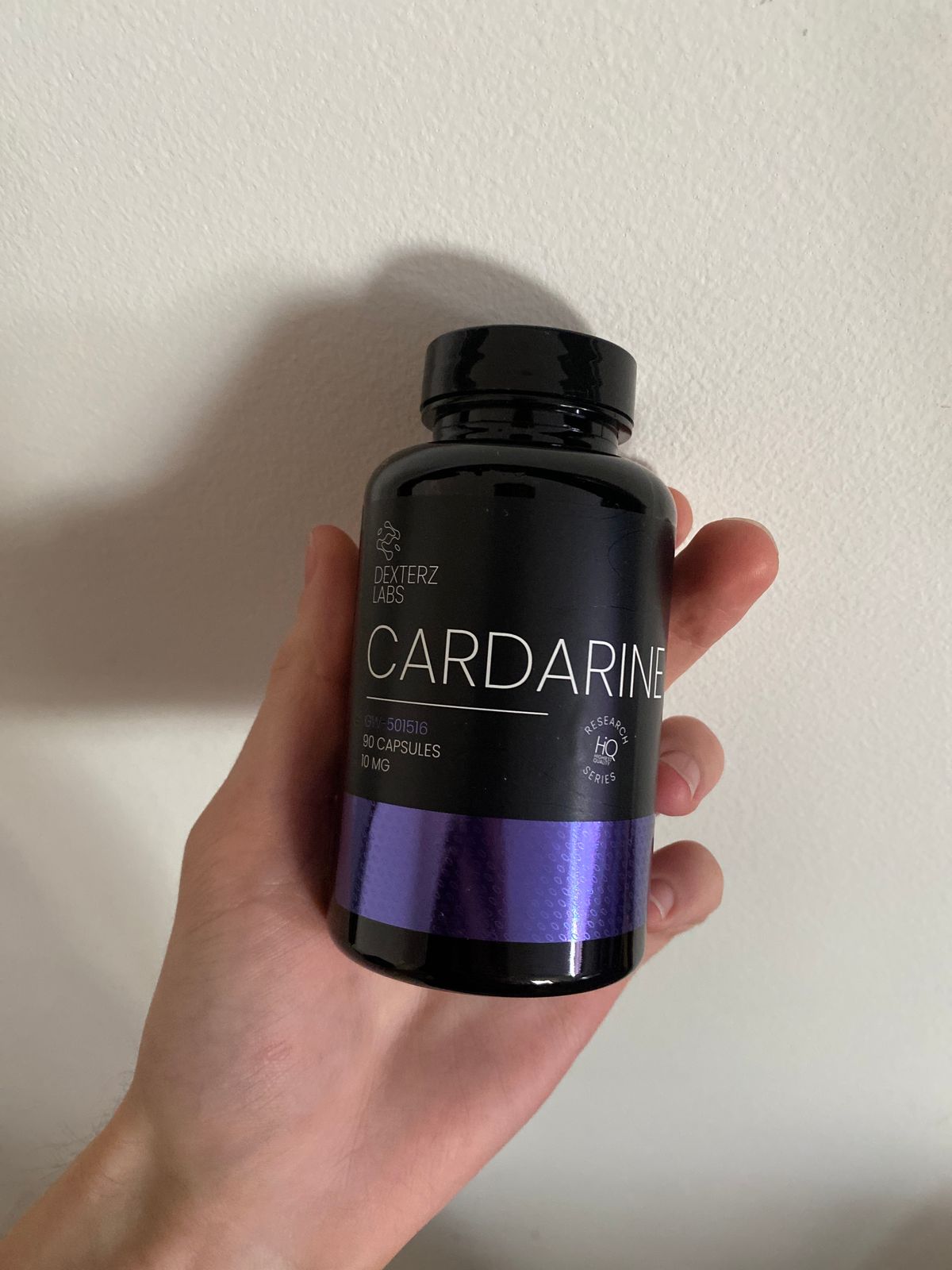
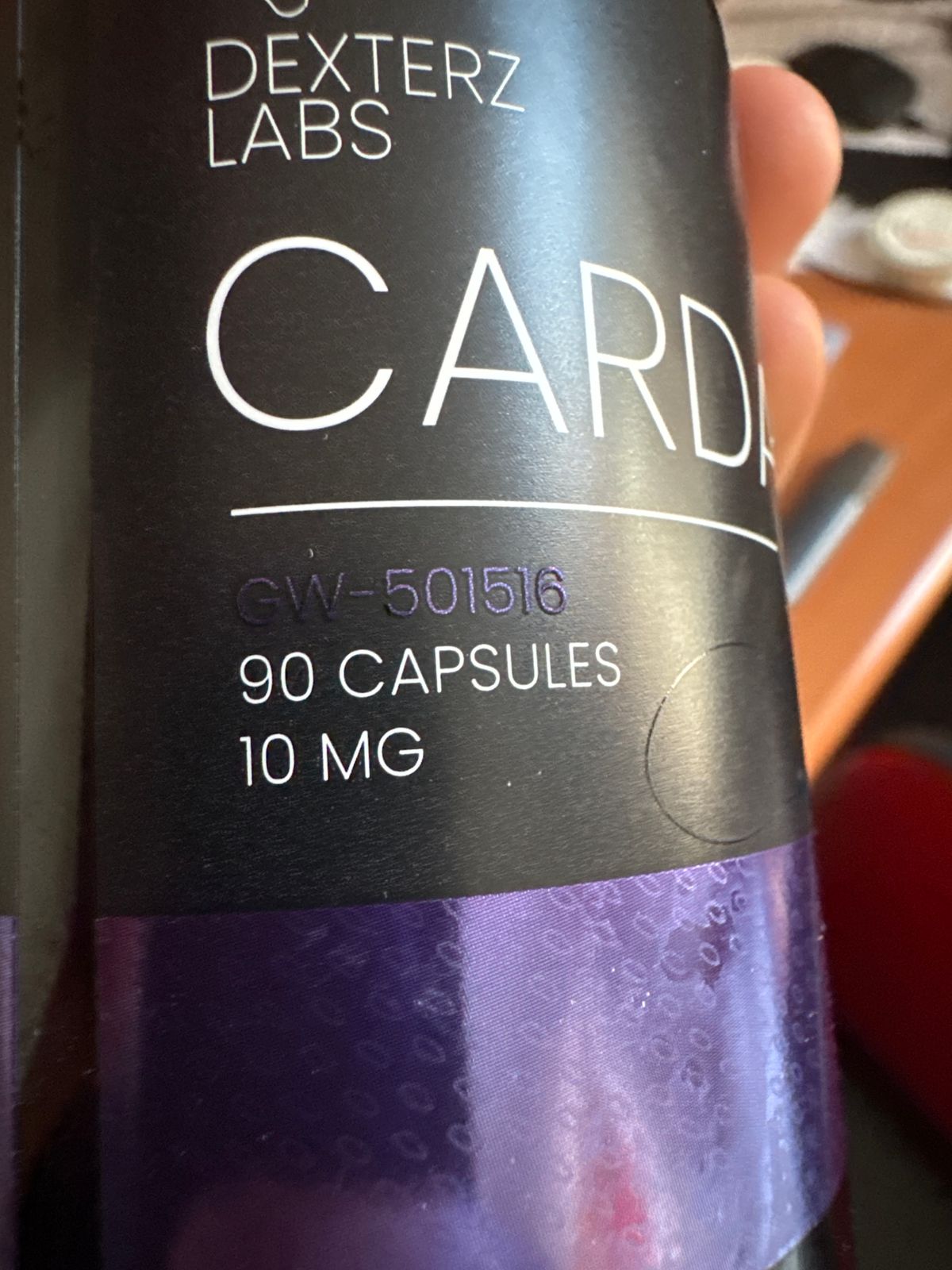
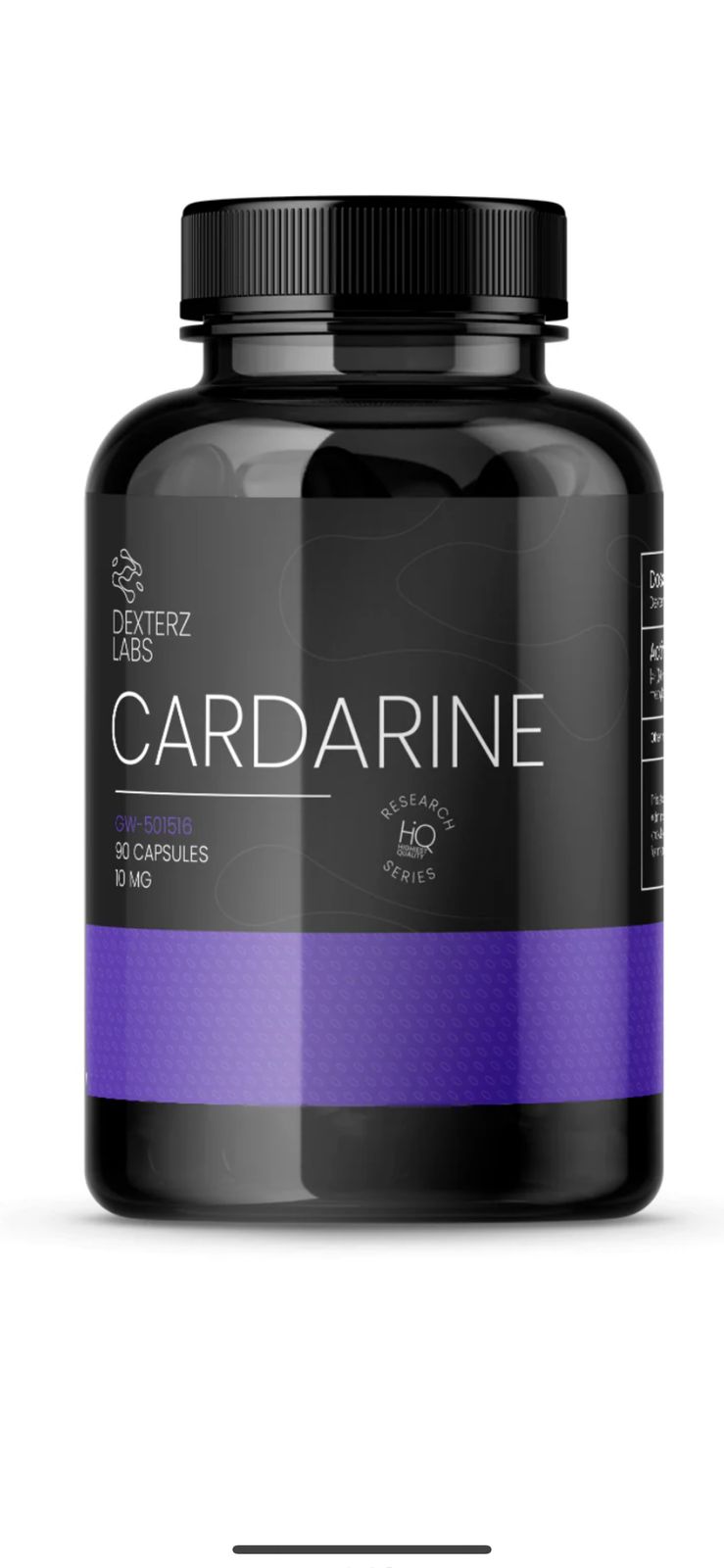
GW-501516, known as cardarine or endurabol, is a PPAR delta agonist developed jointly by GlaxoSmithKline and Ligand Pharmaceuticals in the 1990s. It is not a SARM and does not act on the androgen receptor. This bottle holds 90 capsules at 10mg of GW-501516 per capsule, manufactured in the United Kingdom. Supplied for laboratory research only and not for human consumption.
Product specification
| Compound |
GW-501516 (cardarine, endurabol, GW1516) |
| CAS number |
317318-70-0 |
| Form |
Oral capsule |
| Strength per capsule |
10mg |
| Capsules per bottle |
90 |
| Manufactured |
United Kingdom |
| Testing |
Independent batch certificates of analysis being published as testing is completed |
| Storage |
Cool, dry place below 25C, sealed, away from direct sunlight |
| Research use only |
Yes. Not for human consumption |
What the research says about GW-501516
The compound entered the literature as a metabolic drug candidate. Oliver and colleagues reported in the Proceedings of the National Academy of Sciences in 2001 that GW-501516 raised HDL cholesterol and lowered triglycerides and insulin in obese rhesus monkeys, an effect attributed to activation of the PPAR delta nuclear receptor and downstream changes in fatty acid oxidation and reverse cholesterol transport. Small human trials in the mid 2000s in people with metabolic syndrome reported reductions in plasma triglycerides and liver fat.
Its wider fame comes from Narkar and colleagues, writing in Cell in 2008. That study showed that PPAR delta activation combined with exercise, and AICAR alone, increased running endurance in mice and shifted skeletal muscle towards oxidative fibre characteristics. The paper was widely reported as an exercise mimetic, and it is the direct source of the endurance framing that surrounds this compound. It is worth reading the paper carefully: the strongest endurance effect in trained mice came from the combination of the compound with training, not from the compound alone.
Development was discontinued. Long term rodent carcinogenicity studies conducted during the programme reported tumours across multiple organ systems at the doses tested, and GlaxoSmithKline ended work on the compound. That finding, which is on the public record through WADA and regulatory communications, is the single most important thing to know about GW-501516 and is routinely omitted from retail copy. No long term human safety data exist.
Quality and testing
Dexterz Labs products are manufactured in the UK to a fixed strength per capsule with the batch number printed on every bottle. Independent batch certificates of analysis, confirming identity by HPLC or LC-MS and stating purity, are being commissioned and will be published on this page as each batch is tested. Until then, if you need the batch report for research records, contact sales@sarmsstore.co.uk with your batch number.
Frequently asked questions
Is GW-501516 legal in the UK in 2026? GW-501516 is not a controlled drug under the Misuse of Drugs Act 1971, so possession as a research chemical is lawful in the United Kingdom. Selling or advertising it for human consumption would make it an unlicensed medicine under MHRA rules, so it is offered here strictly as laboratory research material.
How fast is delivery? UK orders go out the same working day when placed before the cut off and arrive on a tracked next day service. Parcels are plain and unbranded, with nothing on the outside that identifies the contents. Worldwide shipping is available to most destinations, with a restricted list at checkout covering countries where customs rules make delivery unreliable.
How should the capsules be stored? The bottle should be kept closed in a cool, dry place below 25C, out of direct light. Handled that way the capsules hold to the shelf life on the label. Do not decant into unlabelled containers, because the batch number on the original bottle is what ties the material to its certificate of analysis.
Is cardarine banned in sport? Yes. It is prohibited at all times under section S4.5 of the WADA prohibited list, which covers metabolic modulators including PPAR delta agonists. WADA issued a specific public warning about the compound in 2013 citing the rodent carcinogenicity findings, which is unusual and worth noting.
How does cardarine differ from SR-9009? Both are non hormonal and both are studied in endurance and metabolic contexts, but they act on different targets. Cardarine activates the PPAR delta nuclear receptor. SR-9009 was designed as an agonist at the REV-ERB nuclear receptors that regulate circadian rhythm. Cardarine has some human pharmacokinetic and metabolic trial data behind it; SR-9009 has essentially none, and its oral bioavailability in rodents was very poor.
Research use only. This product is supplied strictly for laboratory and research purposes and is not for human consumption. It is not a medicine, it is not a food supplement, and it is not intended to diagnose, treat, cure or prevent any disease. Sold to persons aged 18 or over only.



 Skip to content