
Ostarine (MK-2866) and Ligandrol (LGD-4033) are the two SARMs with the most human data, and they are the two most often compared. Both are non steroidal androgen receptor ligands developed as treatments for muscle wasting. The differences between them are a matter of degree: potency per milligram, the size of the effect on lean mass, and the size of the effect on the hormones that the trials tracked. This guide puts the two datasets side by side.
Origins and development
Ostarine was developed by GTx Inc and reached phase III trials for cancer cachexia. Ligandrol was developed by Ligand Pharmaceuticals and licensed to Viking Therapeutics, where it was renamed VK5211 and taken into a phase II hip fracture study. Neither has been approved as a medicine. Both are sold for research and both sit on the WADA prohibited list.
What the trials found
| Ostarine (MK-2866) | Ligandrol (LGD-4033) | |
|---|---|---|
| Best human study | Phase II, 120 adults, 12 weeks (Dalton 2011) | Phase I, 76 men, 21 days (Basaria 2013); phase II hip fracture, 108 patients, 12 weeks (Viking 2018) |
| Lean mass change | +1.3 kg vs placebo at 3 mg over 12 weeks | +1.2 kg vs placebo at 1 mg over 21 days; +4.8 to 9.1 percent vs placebo across the three doses over 12 weeks in the hip fracture study |
| Function | Improved stair climb power | No functional endpoint in phase I; hip fracture study showed a trend in six minute walk |
| Testosterone | Small, dose related fall | Dose dependent fall, recovered by day 56 |
| HDL cholesterol | Reduced | Reduced |
| Half-life | About 24 hours | 24 to 36 hours |
Potency
The numbers above make the main point. Ligandrol produced a similar lean mass gain to Ostarine in a third of the time at a third of the dose. Milligram for milligram it is the more potent compound. That potency shows up on the other side of the ledger too: the LGD-4033 study saw clearer testosterone suppression and a larger fall in sex hormone binding globulin. Ostarine's effect on both was milder at the doses tested.
Selectivity and side effects
Both compounds showed the tissue selectivity that defines the class, with no measurable effect on prostate specific antigen in men and no virilisation in women. Neither is converted to oestrogen or dihydrotestosterone, so the classical steroid side effects did not appear. The adverse effects that did appear were the same for both: a drop in HDL, a reversible dip in testosterone, and in a small number of participants a rise in liver enzymes. Our guide Are SARMs safe? puts those findings in context.
How researchers tend to use the comparison
In the research literature Ostarine is treated as the reference SARM and Ligandrol as the more potent second generation compound. In practical terms, Ostarine is the compound with the longest safety record and the largest number of participants exposed, while Ligandrol has the larger per milligram effect and the stronger hormonal footprint. The two are rarely studied together, and there is no trial of the combination. Our stacks guide explains what the research does and does not say about combining compounds.
Products and testing
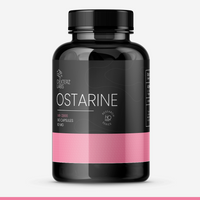
We stock Ostarine MK-2866 10mg and Ligandrol LGD-4033 10mg, both in 90 capsule bottles from Dexterz Labs. Each batch is independently tested and the certificates are on our lab results page. The full compound guides are Ostarine and LGD-4033.
Sources
- Dalton JT et al. (2011). The selective androgen receptor modulator GTx-024 (enobosarm) improves lean body mass and physical function in healthy elderly men and postmenopausal women. J Cachexia Sarcopenia Muscle. PubMed 22031847
- Dobs AS et al. (2013). Effects of enobosarm on muscle wasting and physical function in patients with cancer. Lancet Oncol. PubMed 23499390
- Basaria S et al. (2013). The safety, pharmacokinetics, and effects of LGD-4033 in healthy young men. J Gerontol A Biol Sci Med Sci. PubMed 22459616
- Flores JE et al. (2020). Drug-induced liver injury by selective androgenic receptor modulators. Hepatol Commun. PubMed 32140660
- WADA Prohibited List 2026.
All products on this site are sold for laboratory research use only and are not for human consumption. Nothing in this article is medical advice.