
RAD-140 is sold by SARMs Store strictly as a research compound. Nothing on this page is medical advice or an instruction for human use.
RAD-140, trade-named Testolone during its development by Radius Health, is the most potent of the widely sold SARMs on a milligram basis and the one with the thinnest human evidence. It has one published human trial, a large body of animal work, and a growing set of case reports. This guide separates the three, so that anyone researching the compound can see exactly where the claims come from.
What RAD-140 is
RAD-140 is a non-steroidal selective androgen receptor modulator first described by Miller and colleagues in 2011 (ACS Medicinal Chemistry Letters). In vitro it binds the androgen receptor with high affinity and behaves as a full agonist in muscle tissue and a partial agonist in the prostate. In the original preclinical work, young cynomolgus monkeys given 0.01 to 1 mg/kg for 28 days gained lean mass in a dose-dependent way with no measurable increase in prostate size, which was the finding that defined it as “selective”. Its half-life in animals is around 60 hours.
What the research found
Muscle and bone (animal). Rodent and primate studies showed increased lean mass and bone density at low doses. Potency is high: in rats it was roughly as anabolic as testosterone propionate at a fraction of the dose, with a much lower effect on seminal vesicle and prostate weight.
Neuroprotection (animal). Jayaraman and colleagues (Endocrinology, 2014) reported that RAD-140 protected cultured rat neurons from amyloid-beta toxicity and reduced kainate-induced cell death in the hippocampus of live rats, effects similar to testosterone. This is the origin of the “brain health” claim; it has never been tested in humans.
Breast cancer (human, phase I). The only human study is Radius Health’s phase I trial in postmenopausal women with hormone-receptor-positive breast cancer (LoRusso and colleagues, Clinical Breast Cancer, 2022). Doses of 50 to 150 mg daily were escalated in 22 patients. The dose-limiting toxicities were raised liver enzymes (ALT and AST) and raised bilirubin, and several patients needed dose reductions or discontinuation. The recommended phase II dose was 100 mg daily. The trial was about tumour response, not muscle, so it tells us nothing about body composition in healthy people, but it tells us a lot about the liver.
Case reports. Since 2019 there have been a series of published reports of drug-induced liver injury and cholestatic hepatitis in young men taking products labelled as RAD-140, sometimes alone and sometimes with LGD-4033. In most, liver function recovered after stopping. These reports are the reason RAD-140 is the compound that anyone researching SARMs should treat with the most caution, and the reason that batch testing of what is actually in the capsule matters more here than for any other compound on this site.
Side effects reported
From the human trial: elevated liver enzymes, elevated bilirubin, fatigue, nausea and, in some patients, the need to stop treatment. From animal work and the SARM class generally: suppression of endogenous testosterone and LH that is dose-dependent and reversible, and reduced HDL cholesterol. From case reports: hepatotoxicity, in some cases severe. RAD-140 is not aromatised to oestrogen, so oestrogen-related effects are not expected, but the drop in testosterone can produce the same low-oestrogen symptoms seen with other SARMs.
RAD-140 compared with Ostarine and LGD-4033
Ostarine has phase III data and a mild profile. LGD-4033 has phase I data in healthy men and sits in the middle for potency. RAD-140 is the most potent per milligram, has the least human data, and is the only one of the three with a documented liver signal in its own clinical trial. Anyone choosing between them for research purposes should weigh potency against the evidence base rather than assume more potent means better.
Legal status in the UK, 2026
RAD-140 is not a controlled substance under the Misuse of Drugs Act 1971. Selling or advertising it for human use makes it an unlicensed medicine under the Human Medicines Regulations 2012, and the MHRA has taken action against UK sellers on that basis, which is why it is sold here for research only. It is prohibited at all times by WADA under S1.2 (other anabolic agents) and has been detected in anti-doping since 2017.
How to check a supplier
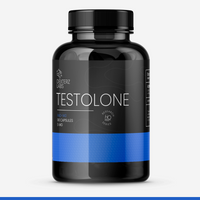
Because the compound is potent and the liver reports are real, identity and purity testing is not optional. A genuine supplier will show a batch-specific certificate of analysis with HPLC or LC-MS identity confirmation and a purity figure, a batch number that matches the bottle, and clear labelling of milligrams per capsule. Dexterz Labs Testolone RAD-140 is made in the UK at 5 mg per capsule, 90 capsules. Every batch is independently tested and its certificate of analysis is published on the product page and the Lab Testing page.
Frequently asked questions
Is RAD-140 stronger than testosterone? In animal muscle models it was comparable to testosterone propionate on a per-milligram basis while having much less effect on the prostate. That is not the same as being “stronger” in humans, where it has not been studied for muscle.
Does RAD-140 suppress testosterone? Yes, in a dose-dependent and reversible way, as with all SARMs that act on the androgen receptor.
Is RAD-140 liver toxic? Raised liver enzymes were the dose-limiting toxicity in its only human trial, and there are published case reports of liver injury. This is the most important safety finding about the compound.
How long does RAD-140 stay in the body? The animal half-life is roughly 60 hours, and metabolites are detectable in urine for weeks; it is a routinely detected substance in anti-doping.
Is RAD-140 legal in the UK in 2026? Legal to buy and possess as a research compound, illegal to sell or advertise for human consumption, banned in sport.
Related reading
- Ostarine (MK-2866): the complete research guide
- LGD-4033 (Ligandrol): the research guide
- Are SARMs safe? What the evidence says about side effects
- Third-party testing: how to read a certificate of analysis
- Browse the range: SARMs UK
Research product: Dexterz Labs Testolone RAD-140 5 mg, 90 capsules
Related peptides in the research
Readers comparing SARMs with the peptide literature usually turn to the tissue-repair peptides next: BPC-157 and TB-500, both studied in rodent tendon, ligament and wound models, and the two together in the Wolverine blend. For how the two classes differ in mechanism, evidence and storage, read SARMs vs peptides. See the full range of research peptides UK from Origin Peptides.
Sources
Primary papers and official guidance cited in this guide, linked so each one can be checked directly.
- Miller CP et al., ACS Med Chem Lett 2011;2:124-129. PubMed 24900290
- Jayaraman A et al., Endocrinology 2014;155:1398-1406. PubMed 24428527
- LoRusso P et al., Clin Breast Cancer 2022;22:67-77. PubMed 34565686
- Flores JE et al., Hepatol Commun 2020;4:450-452. PubMed 32140660
- Barbara M et al., ACG Case Rep J 2020;7:e00409 (RAD-140 and LGD-4033 liver injury case report). PubMed 33062783
- WADA Prohibited List 2026.
- Human In Vivo Metabolism and Elimination Behavior of Micro-Dosed Selective Androgen Receptor Modulator RAD140 for Doping Control Purposes. Metabolites, 2022.