
Andarine is sold by SARMs Store strictly as a research compound. Nothing on this page is medical advice or an instruction for human use.
Andarine, coded S-4 and sometimes GTx-007, is one of the oldest compounds in the SARM category and in some ways the most historically important. It came out of the University of Tennessee and GTx programme that established the concept of tissue-selective androgen receptor modulation, and the preclinical work on it is the reason compounds like Ostarine were developed at all. It also carries the most distinctive reported side effect in the category: a yellow tint to vision and impaired night vision. This guide covers the published research, why development was halted, what the visual effect is and where UK law stands in 2026.
What Andarine is
Andarine is a non-steroidal SARM of the aryl propionamide class, the same chemical family as Ostarine and S-23. It derives structurally from bicalutamide, a non-steroidal androgen receptor antagonist used in prostate cancer, modified until the resulting molecules acted as agonists in muscle and bone instead of antagonists. That lineage is the origin of the modern SARM field.
It binds the androgen receptor as a partial agonist, with strong activity in muscle and bone and much weaker activity in the prostate. It is orally active, not aromatised to oestrogen and not converted to dihydrotestosterone. Its half-life is short compared with Ostarine and LGD-4033.
What the research found
Preclinical characterisation (Gao and colleagues, Endocrinology, 2005). The central paper used castrated male rats, the standard model for androgen research. Andarine restored levator ani muscle weight to intact levels in a dose-dependent way while producing much smaller effects on prostate and seminal vesicle weight, which is the definition of tissue selectivity and the result that made the field credible. The same body of work showed that Andarine did not suppress luteinising hormone and follicle stimulating hormone as strongly as testosterone did at equivalent anabolic effect, which was the second key selectivity claim.
Bone. Related GTx work in ovariectomised rats, a model of post-menopausal bone loss, reported that Andarine preserved bone mineral density and improved bone mechanical strength alongside increases in muscle mass. The early clinical ambition was osteoporosis and muscle wasting, not sport.
Prostate. In benign prostatic hyperplasia models, Andarine reduced prostate weight while maintaining muscle, and it advanced into early clinical work with that indication in view.
Human trials. Andarine reached phase I. It did not progress further, and GTx moved its development effort to Ostarine, which reached phase III. The published human record for Andarine is therefore very limited, with no phase II or phase III efficacy data. The usual explanation for the switch is the visual side effect described below, a serious problem for a drug intended for long-term use in older patients.
Side effects reported
The visual effect. This is what Andarine is known for. Reports describe a yellow or amber tint over the visual field and difficulty adapting to darkness, most noticeable moving from a lit room into a dark one or driving at night. The effect appears in the early GTx development work and is reported consistently in the community record, which is unusual for an anecdotal effect: it is specific, reproducible in description, and it appears and disappears with the compound. The proposed explanation is interaction with androgen receptors in retinal tissue, altering the kinetics of the visual cycle. Every account describes it as reversible on withdrawal, and no published study reports permanent damage. It should still be treated as the compound’s defining liability and a plausible reason its development was abandoned.
Hormonal. In the animal work, suppression of luteinising hormone and follicle stimulating hormone occurred but was less pronounced than with testosterone at comparable anabolic effect. Human hormonal data are limited to the unpublished detail of the phase I programme, so no confident statement about suppression in people is possible.
Other. No published human data exist on liver enzymes, lipids or cardiovascular parameters for Andarine specifically. As with all compounds in this category, the published case reports of liver injury associated with bodybuilding products labelled as SARMs are relevant background, particularly where products contained undeclared ingredients.
Andarine compared with other SARMs
Ostarine is Andarine’s direct successor from the same laboratory: more potent per milligram, longer half-life, phase III human data and no visual effect. That comparison explains the history, since GTx had two candidates and advanced the one without a vision problem. S-23 is the other aryl propionamide, far more potent at the receptor but with only a rat study behind it. LGD-4033 comes from a different chemical series with phase I and phase II human data. On evidence quality Andarine sits above S-23 and YK-11 because of its preclinical depth, and below Ostarine because its clinical programme stopped.
Legal status in the UK, 2026
Andarine is not a controlled substance under the Misuse of Drugs Act 1971 and is not a named Class C anabolic steroid. Under the Human Medicines Regulations 2012 it is an unlicensed medicinal product if sold, supplied or advertised for human use, which the MHRA enforces, so it is supplied in the UK strictly for laboratory research. The Psychoactive Substances Act 2016 does not apply. In sport, Andarine is prohibited at all times under the WADA Prohibited List as an “other anabolic agent” in section S1.2, it has been detectable in anti-doping testing for many years, and it has appeared in adverse findings including cases attributed to contaminated supplements. UK Anti-Doping applies the same list.
How to check a supplier
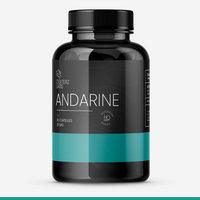
Ask for the certificate of analysis for the batch number printed on your bottle rather than a generic example. It should confirm identity by HPLC or LC-MS and give a purity percentage. The label should carry compound name, milligrams per capsule, capsule count, batch number and a research-only notice. UK manufacture makes the testing claim auditable. Dexterz Labs Andarine S-4 is made in the UK at 25 mg per capsule, 90 capsules per bottle, and every batch is independently tested with its certificate of analysis published on the product page.
Frequently asked questions
Why does Andarine cause yellow vision? The accepted explanation is interaction with androgen receptors in retinal tissue, which alters the visual cycle. It is the compound’s best known effect and appears in the early development record as well as in community reports.
Is the vision effect permanent? Every account describes it as reversible, resolving after the compound is withdrawn, and no published study reports lasting damage.
Did Andarine reach human trials? It reached phase I. It did not advance further, and development effort moved to Ostarine.
Is Andarine the same as S-4? Yes. Andarine, S-4 and GTx-007 all refer to the same molecule.
Why is Andarine sold at 25 mg per capsule when other SARMs are 5 or 10 mg? It is less potent per milligram than LGD-4033 or RAD-140, and the animal work used correspondingly higher amounts.
Is Andarine legal in the UK in 2026? Legal to buy and possess as a research compound, not lawful to sell or advertise for human consumption, and banned in sport.
Related reading
- Ostarine (MK-2866): the complete research guide
- S-23: what the research shows
- Are SARMs legal in the UK? 2026 update
- Third-party testing: how to read a certificate of analysis
- Browse the range: SARMs UK
Research product: Dexterz Labs Andarine S-4 25 mg, 90 capsules
Related peptides in the research
Readers comparing SARMs with the peptide literature usually turn to the tissue-repair peptides next: BPC-157 and TB-500, both studied in rodent tendon, ligament and wound models, and the two together in the Wolverine blend. For how the two classes differ in mechanism, evidence and storage, read SARMs vs peptides. Full range: Origin Peptides range.
Sources
- Gao W et al., Endocrinology 2005;146:4887-4897. PubMed 16099859
- Kearbey JD et al., Pharm Res 2007;24:328-335 (S-4 in ovariectomised rats). PubMed 17063395
- Chen J et al., Mol Interv 2005;5:173-188 (review of the GTx SARM programme). PubMed 15994457
- WADA Prohibited List 2026.