
Ashwagandha is a food supplement ingredient, not a research compound. SARMs Store sells research compounds separately and under their own terms. Nothing on this page is medical advice, and nothing here is a claim to treat, prevent or cure any condition.
Ashwagandha is the most researched botanical in the sports supplement category, which is a lower bar than it sounds but still means something. Unlike most of what is written about on this site, it has several randomised, placebo-controlled human trials behind it in indexed journals. It also has a genuine safety discussion that most marketing pages omit. This guide sets out what the trials measured, what the safety literature says and where the ingredient sits under UK food law.
What ashwagandha is
Ashwagandha is the root of Withania somnifera, a shrub in the nightshade family used in Ayurvedic practice for centuries and usually classed as an adaptogen. The bioactive constituents most often measured are the withanolides, a family of steroidal lactones, and standardised extracts are specified by withanolide content.
The extract matters as much as the plant. KSM-66 is a branded root-only extract standardised to around five per cent withanolides, and it is the material used in a large proportion of the published trials. Sensoril is a different branded extract using root and leaf, standardised differently and studied separately. A generic root powder is not interchangeable with either, and a result obtained with one extract does not automatically transfer to another product.
The proposed mechanisms centre on modulation of the hypothalamic-pituitary-adrenal axis, with reductions in cortisol the most consistently reported biochemical finding, alongside effects on GABAergic signalling often proposed to explain the sleep results.
What the trials found
Stress and cortisol. Chandrasekhar, Kapoor and Anishetty, in the Indian Journal of Psychological Medicine in 2012, ran a 60-day randomised, double-blind, placebo-controlled study in 64 adults with a history of chronic stress, using a high-concentration full-spectrum root extract. The treated group showed significantly greater reductions in perceived stress scale scores and in serum cortisol than placebo. This is the study most often cited for the stress claim, though the sample is modest.
Strength and body composition. Wankhede and colleagues, in the Journal of the International Society of Sports Nutrition in 2015, randomised 57 young men beginning a resistance training programme to root extract or placebo for eight weeks. The treated group showed significantly greater increases in bench press and leg extension strength, greater muscle size at the arm and chest, greater reduction in body fat percentage, lower creatine kinase, and a rise in serum testosterone.
Testosterone in older men. Lopresti and colleagues, in the American Journal of Men’s Health in 2019, ran a 16-week randomised, placebo-controlled crossover study in overweight men aged 40 to 70. They reported an increase in DHEA-S and a modest increase in testosterone relative to placebo, with fatigue and vigour measures less consistent. The effect sizes are small.
Anxiety and sleep. Salve and colleagues, in Cureus in 2019, gave healthy adults 250 mg or 600 mg of root extract daily for eight weeks against placebo, reporting reduced perceived stress scores, reduced serum cortisol and improved sleep quality, with the higher dose better on several measures. Separate insomnia trials report modest improvements in sleep onset latency and efficiency.
Taken together the pattern is consistent rather than dramatic: moderate effects on subjective stress and cortisol, a real but single-trial-dominated signal on strength in beginners, and small hormonal changes in older or overweight men. Most trials are small, several have industry sponsorship, and independent replications are fewer than the volume of citation suggests.
Safety and reported adverse effects
In the trials ashwagandha was generally well tolerated, with gastrointestinal upset, drowsiness and loose stools the most common minor effects. Tandon and Yadav, reviewing the clinical evidence in the Journal of Ethnopharmacology in 2020, concluded that the trial record showed a broadly favourable short-term safety profile while noting the limited duration of most studies.
Against that sit two things a complete account has to include.
The first is liver injury. Björnsson and colleagues, in Liver International in 2020, described a series of cases of ashwagandha-associated liver injury from Iceland and the United States, with a cholestatic or mixed pattern, jaundice and prolonged recovery. Further cases have been reported since. These are rare events against very widespread use, but the signal is real and now recognised in the drug-induced liver injury literature.
The second is regulatory caution in Europe. In 2020 the Danish National Food Institute at the Technical University of Denmark published a risk assessment raising concerns including possible effects on sex hormones and the thyroid, and possible effects relevant to pregnancy, and Denmark subsequently restricted the ingredient in food supplements.
Pregnancy and breastfeeding are contraindicated in the traditional literature and in current supplement guidance. People with thyroid, autoimmune or liver conditions, and anyone taking sedatives, thyroid medication or immunosuppressants, should speak to a healthcare professional first.
Comparison with related supplements
Ashwagandha is often grouped with rhodiola, which has a smaller literature focused on fatigue, and with tongkat ali, which has a modest set of trials on testosterone and stress. In testosterone support formulas it is frequently combined with zinc, magnesium, vitamin D and fenugreek. Of these, vitamin D and zinc have well-established roles where a deficiency exists and little demonstrated effect where it does not, which is the most important framing for the category. Ashwagandha’s distinguishing feature is that its stress and cortisol findings are replicated across several trials.
UK status in 2026
Ashwagandha is sold in the United Kingdom as a food supplement ingredient. It is not a controlled substance and not a licensed medicine. Products must comply with food law, including accurate labelling and the prohibition on medicinal claims: a supplement may not be presented as treating, preventing or curing a condition, and permitted health claims under the GB register do not currently include the effects discussed above. It is not on the WADA Prohibited List, though athletes should still use batch-tested products, because contamination risk is a separate issue from the legality of an ingredient. Given the Danish assessment, anyone selling ashwagandha in the UK should watch the Food Standards Agency position.
How to check a supplier
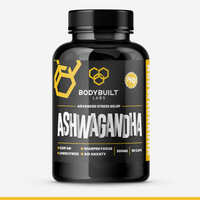
Look for a product that names the extract, states the plant part, gives the withanolide standardisation percentage, and declares amount per capsule and capsule count. Batch testing by an independent laboratory is the practical safeguard against the contamination and substitution problems documented across the supplement market. Bodybuilt Labs Testo Boost is manufactured in the UK, 90 capsules per bottle, and batch certificates of analysis are being published on the product page as testing is completed.
Frequently asked questions
Does ashwagandha raise testosterone? Two trials reported increases, Wankhede in 2015 and Lopresti in 2019. The changes were modest and the studies small. It is not a large or reliable effect.
What is KSM-66? A branded root-only extract standardised to around five per cent withanolides, used in a large share of the published trials. Results obtained with it do not automatically apply to other extracts.
How long do the trials run? Most are eight to sixteen weeks. There is very little long-term human data.
Is ashwagandha safe? Trials report good short-term tolerability, but Björnsson and colleagues published a series of liver injury cases in 2020 and Denmark restricted the ingredient following a 2020 risk assessment. It is not suitable in pregnancy or breastfeeding.
Does it help sleep? Several trials report modest improvements in sleep quality and onset latency alongside reductions in cortisol.
Is ashwagandha legal in the UK? Yes, as a food supplement ingredient. Medicinal claims may not be made for it, and its status is under review in some European jurisdictions.
Related reading
- Do the studies support a PCT after SARMs?
- SARMs versus steroids and prohormones
- SARMs results: what the trials measured
- Third-party testing: how to read a certificate of analysis
- Browse the range: supplements range
Supplement product: Bodybuilt Labs Testo Boost, 90 capsules
Sources
- Chandrasekhar K, Kapoor J, Anishetty S, Indian J Psychol Med 2012;34:255-262. PubMed 23439798
- Wankhede S et al., J Int Soc Sports Nutr 2015;12:43. PubMed 26609282
- Lopresti AL et al., Am J Mens Health 2019;13:1557988319835985. PubMed 30854916
- Salve J et al., Cureus 2019;11:e6466. PubMed 32021735
- Tandon N, Yadav SS, J Ethnopharmacol 2020;255:112768. PubMed 32201301
- Björnsson HK et al., Liver Int 2020;40:825-829. PubMed 31991029
- DTU National Food Institute (Denmark) risk assessment of Withania somnifera, 2020.
Often paired with ashwagandha: see our tongkat ali guide.