
Last updated 15 October 2026 · SARMs Store editorial team. This guide summarises published research on turkesterone and Ajuga turkestanica. It is not medical advice, it makes no health claims and it contains no instructions for use. Our turkesterone product is sold as a food supplement; always read the product label. 18+ only.
Turkesterone is a plant compound from Ajuga turkestanica, a flowering herb from the mountains of Central Asia, and it is one of the most searched natural extracts in the UK. Interest has grown much faster than the evidence. This guide explains what turkesterone is, what the laboratory, animal and human studies have actually measured, how it differs from ecdysterone, where it stands in UK law and in sport, and what to check on a turkesterone label.
Turkesterone at a glance
Turkesterone is a phytoecdysteroid, a plant version of the hormones insects use to moult. Most of the research on it is in cells and animals, and only one small human study has tested turkesterone itself.
| Compound class | Phytoecdysteroid (plant ecdysteroid) |
|---|---|
| Chemical identity | 11α-hydroxy-20-hydroxyecdysone; C27H44O8; molecular weight about 496.6; CAS 41451-87-0 |
| Main plant source | Ajuga turkestanica (Regel) Briq., family Lamiaceae, native to Central Asia |
| Closest relative | 20-hydroxyecdysone, usually sold as ecdysterone or beta-ecdysterone |
| Highest human evidence | One small, short preliminary study in 11 healthy young men (2024) |
| UK status 2026 | Sold as a food supplement ingredient; no novel food authorisation needed; no authorised health claims; not a controlled drug |
| Sport | Not named on the WADA Prohibited List; ecdysterone has been on the WADA Monitoring Program since 2020 |
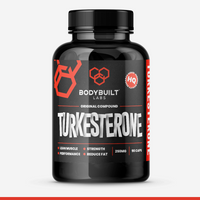
| Our product | Bodybuilt Labs Turkesterone 500mg, 90 capsules, made in the UK |
What is turkesterone?
Turkesterone is an ecdysteroid, one of a family of steroid shaped molecules that act as moulting hormones in insects and other arthropods. Many plants make the same kind of molecule, thought to help defend them from plant eating insects, and these plant forms are called phytoecdysteroids.
In a 2001 review in Phytochemistry, Laurence Dinan described phytoecdysteroids as a family of about 200 plant steroids related in structure to 20-hydroxyecdysone, the main moulting hormone of insects. Turkesterone is one of them. Chemically it is 20-hydroxyecdysone with an extra hydroxyl group at the 11α position, which is why its formula has one more oxygen atom (C27H44O8 compared with C27H44O7). That small change is the reason marketers describe it as a distinct and stronger compound, although no head-to-head human study has tested that.
Is turkesterone a hormone in humans?
Ecdysteroids are hormones in insects, not in mammals. A 2008 review by Báthori and colleagues in Current Medicinal Chemistry noted that ecdysteroids do not bind the classic cytosolic steroid receptors that testosterone and its synthetic relatives act on, and that their effects in vertebrates, where they occur, probably run through other signalling pathways.
Ajuga turkestanica: the source plant
Ajuga turkestanica is a small flowering plant in the mint family that grows in the mountains of Central Asia, particularly Uzbekistan. Preparations made from it are used locally in traditional and cosmetic products, and it is the plant behind nearly all turkesterone extracts on sale.
A 2024 study by Mamadalieva and colleagues in Scientific Reports profiled the chemistry of the plant's flowers, fruits, leaves, roots, seeds and stems using UHPLC mass spectrometry and NMR. They identified 51 compounds, including 10 ecdysteroids, 11 flavonoids and 9 diterpenes. Notably, the two main compounds they chose as quality markers for the plant were 20-hydroxyecdysone and an iridoid called 8-O-acetylharpagide, not turkesterone. In other words, an Ajuga turkestanica extract contains a mixture of ecdysteroids, and turkesterone is only one of them.
What the research has looked at
The evidence for turkesterone comes mostly from cell studies, animal studies and reviews, with a single small human study of turkesterone itself. The larger human studies in this field tested ecdysterone (20-hydroxyecdysone), a related but different molecule.
Cell studies
Gorelick-Feldman and colleagues at Rutgers University reported in the Journal of Agricultural and Food Chemistry in 2008 that phytoecdysteroids and ecdysteroid-containing plant extracts increased protein synthesis by up to 20% in mouse C2C12 muscle cells and in human primary muscle cells. The effect was blocked by an inhibitor of the PI3K enzyme, which suggested a PI3K signalling route rather than an androgen receptor route. A 2010 follow-up from the same group linked the effect to a rapid calcium flux and Akt activation. Other research groups have proposed an oestrogen receptor beta mechanism for ecdysterone, and the pharmaceutical form of 20-hydroxyecdysone in clinical development is described by its developer as an activator of the MAS receptor. The mechanism is not settled.
Animal studies
The animal data on Ajuga turkestanica extract are mixed. Lawrence and colleagues reported in 2021 in the International Journal of Environmental Research and Public Health that an extract of Ajuga turkestanica enriched in phytoecdysteroids, and pure 20-hydroxyecdysone, given to sedentary 20 month old mice daily for 28 days, did not change body, muscle or organ mass, muscle fibre size or fibre type, or protein synthesis signalling markers. The study's title states the conclusion plainly: phytoecdysteroids did not have anabolic effects in skeletal muscle in these aging mice.
In a different design, Martins and colleagues reported in Nutrients in 2021 on castrated male and female mice given extracts of Ajuga turkestanica, Eurycoma longifolia (tongkat ali) and Urtica dioica (nettle), alone or combined, alongside resistance exercise. They reported some changes in body composition and physical function with particular combinations, including better grip strength in castrated male mice given Ajuga turkestanica with exercise. Effects differed between extracts and between the sexes.
The human study of turkesterone
The only published human study of turkesterone itself is small and short. Harris and colleagues at Baylor University reported in the journal Muscles in 2024 on 11 healthy men aged about 23, who were tested before, 3 hours after and 24 hours after a single serving of turkesterone at one of two levels, or placebo.
The study found no statistically significant effects on serum IGF-1, resting metabolic rate, or fat and carbohydrate metabolism. IGF-1 values were numerically higher in the turkesterone conditions, but not significantly so, and the authors described the work as preliminary and wrote that it did not fully support turkesterone as a potent anabolic supplement. It did not measure muscle size or strength, and it lasted one day.
The ecdysterone studies people quote
Much of what is written about turkesterone actually comes from studies of ecdysterone. Those studies disagree with each other.
- Wilborn and colleagues, 2006: in 45 resistance-trained men over 8 weeks, reported in the Journal of the International Society of Sports Nutrition, a 20-hydroxyecdysone supplement produced no significant differences from placebo in fat-free mass, body fat, strength, sprint power or hormone markers.
- Isenmann and colleagues, 2019: in a 10 week strength training study of 46 young men, reported in Archives of Toxicology, the authors observed significantly larger increases in muscle mass and one-repetition bench press in the ecdysterone groups, and recommended that ecdysterone be considered for the WADA Prohibited List.
- Dissemond and colleagues, 2025: in a 12 week randomised study of a commercial 20-hydroxyecdysone and diosgenin product, reported in the Journal of the International Society of Sports Nutrition, there were no differences from placebo. Laboratory analysis then showed the capsules contained less than 1% of the labelled 20-hydroxyecdysone.
Pharmaceutical-grade 20-hydroxyecdysone (BIO101) has also been tested as a drug candidate. A phase 2b trial in 233 older adults with sarcopenia, reported by Fielding and colleagues in the Journal of Cachexia, Sarcopenia and Muscle in 2025, did not reach significance on its main walking speed measure in the full analysis population, although the developer reported trends it considered encouraging. That is a drug development programme, not a food supplement.
What is missing
There is no published controlled human trial of turkesterone lasting more than a day, no human trial of turkesterone measuring muscle size, strength or body composition, and no long term human safety data for turkesterone. Reviews, including a 2024 overview of ecdysterone and turkesterone by Todorova and colleagues in Nutrients, describe the compounds as promising but rely heavily on cell, animal and ecdysterone data.
Turkesterone vs ecdysterone
Turkesterone and ecdysterone (20-hydroxyecdysone) are close chemical relatives from the same family. Ecdysterone has more human research; turkesterone has more marketing.
| Turkesterone | Ecdysterone (beta-ecdysterone) | |
|---|---|---|
| Chemical name | 11α-hydroxy-20-hydroxyecdysone | 20-hydroxyecdysone |
| Formula | C27H44O8 | C27H44O7 |
| Main sources | Ajuga turkestanica | Cyanotis species, Rhaponticum carthamoides, spinach, quinoa |
| Human studies | One small, one day study (2024) | Several training studies with conflicting findings; a drug development programme (BIO101) |
| WADA | Not named | On the Monitoring Program since 2020; not prohibited |
| Our product | Turkesterone 500mg | Beta Ecdysterone 500mg |
Because Ajuga turkestanica extracts also contain 20-hydroxyecdysone, a turkesterone product is in practice usually a mix of ecdysteroids. That is one reason the label's standardisation claim matters.
Turkesterone UK: legal status in 2026
In the UK turkesterone is sold as a food supplement ingredient, not as a medicine and not as a controlled drug. Ajuga turkestanica extract does not need novel food authorisation to be sold as a food supplement ingredient. That means it is regulated as food, and it cannot be sold with claims that it treats, prevents or cures disease.
Food supplement rules
Food supplements in England are governed by the Food Supplements (England) Regulations 2003, with equivalent rules in Scotland, Wales and Northern Ireland, and are enforced by local authorities with guidance from the Food Standards Agency. A UK supplement must be safe, correctly labelled with its ingredients and the daily amount stated by the manufacturer, carry a warning not to exceed it, and state that it is not a substitute for a varied diet. No health claim for turkesterone or Ajuga turkestanica is authorised on the Great Britain nutrition and health claims register, so a UK seller should not make one. We make none for our product.
Food supplement versus research material
Turkesterone reaches the market in two quite different forms. Capsules such as ours are food supplements, made and labelled under food law. Pure turkesterone is also sold separately to laboratories as an analytical reference standard, which is a research chemical and is not intended to be eaten. If a product is presented as treating a condition or as working like a drug, the MHRA can classify it as a medicine, as its guidance on borderline products explains.
Controlled drug status
Turkesterone is not listed under the Misuse of Drugs Act 1971, and it is legal to buy and possess in the UK.
Turkesterone and sport
Turkesterone itself is not named on the World Anti-Doping Agency Prohibited List or Monitoring Program. Its relative ecdysterone has been on the WADA Monitoring Program, which tracks substances for patterns of misuse without banning them, every year since 2020.
Operation Supplement Safety, run by the US Department of Defense, noted in a June 2026 article that ecdysterone has been on the WADA Monitoring Program since 2020, gave no WADA status for turkesterone, and warned that ingredient content in these supplements can differ from the label. Tested athletes should check with their governing body and remember that any supplement can be contaminated.
Quality and labelling: what the analyses show
Independent laboratory analyses of ecdysteroid supplements have repeatedly found that the label and the contents do not match. That makes quality and labelling the most practical issue in this category.
- Ambrosio and colleagues, 2020: in the Journal of Pharmaceutical and Biomedical Analysis, a validated UHPLC mass spectrometry method applied to 12 supplements labelled as containing ecdysterone showed an actual content generally much lower than labelled.
- Hunyadi and colleagues, 2016: in Scientific Reports, food supplements sold in Germany as spinach extracts turned out to have been made from Cyanotis arachnoidea, a much richer ecdysteroid source, an unusual kind of counterfeiting.
- Todorova and colleagues, 2026: in Molecules, 13 supplements labelled as containing Rhaponticum, Cyanotis, Ajuga turkestanica or ecdysteroids were analysed. Several products standardised to 80 to 95% ecdysterone contained substantially less than declared, and turkesterone content varied between products marketed as standardised extracts.
- Dissemond and colleagues, 2025: the product tested in their training study contained less than 1% of its labelled 20-hydroxyecdysone.
What to check on a turkesterone label
A clear turkesterone label names the plant, the extract and what the extract is standardised to. Look for the points below.
- The botanical name. It should say Ajuga turkestanica extract, not just "turkesterone complex" or "ecdysteroid blend".
- What the extract is standardised to. A percentage of turkesterone specifically is more informative than a percentage of "total ecdysteroids", which may be mostly 20-hydroxyecdysone.
- How it was measured. HPLC is the usual method for ecdysteroids. Simple UV tests measure a chemical feature that all ecdysteroids share, so they cannot tell turkesterone apart from the others.
- Milligrams of extract per capsule and the number of capsules per tub, so products can be compared fairly.
- Where it was made. UK made supplements must meet UK food safety and labelling rules.
- No health or drug claims. A UK food supplement should not claim to treat or prevent disease, and no health claim is authorised for turkesterone.
- The legally required statements: the daily amount stated by the manufacturer, a warning not to exceed it, a statement that it is not a substitute for a varied diet, and a warning to keep it out of reach of children.
Bodybuilt Labs Turkesterone 500mg
Our Bodybuilt Labs Turkesterone 500mg is a UK made food supplement containing Ajuga turkestanica extract standardised for turkesterone, 250mg per capsule, 90 capsules per tub. It is sold as a food supplement, not as a research chemical or a medicine. Read the label before use, and speak to a GP or pharmacist first if you have a medical condition or use any medication. It is not suitable for under 18s or during pregnancy or breastfeeding.
Related products in the same category are Bodybuilt Labs Beta Ecdysterone 500mg, Tongkat Ali 500mg and Ashwagandha 500mg. The full range is in our supplements collection.
Frequently asked questions
What is turkesterone?
A phytoecdysteroid, a plant compound related to insect moulting hormones, found mainly in Ajuga turkestanica from Central Asia. Chemically it is 20-hydroxyecdysone with an extra hydroxyl group.
Is turkesterone a steroid?
It has a steroid shaped skeleton, like cholesterol and many plant compounds, but it is an ecdysteroid, not a testosterone derivative. Reviews report that ecdysteroids do not bind the classic androgen receptor, and turkesterone is not a controlled drug in the UK.
Is turkesterone legal in the UK?
Yes. It is sold as a food supplement ingredient and is not listed under the Misuse of Drugs Act 1971. No health claim for it is authorised in Great Britain.
Is turkesterone banned in sport?
Turkesterone is not named on the WADA Prohibited List. Its relative ecdysterone has been on the WADA Monitoring Program since 2020. Tested athletes should check with their governing body, as any supplement can be contaminated.
Has turkesterone been tested in humans?
Only in one small preliminary study of 11 healthy men, published in 2024, which found no significant effects on IGF-1 or resting metabolic rate over 24 hours. Larger human studies have tested ecdysterone, not turkesterone.
What is the difference between turkesterone and ecdysterone?
They are close relatives. Ecdysterone is 20-hydroxyecdysone; turkesterone has one extra hydroxyl group. Ecdysterone comes mainly from Cyanotis and Rhaponticum and has more human research; turkesterone comes from Ajuga turkestanica.
Can you buy turkesterone in the UK?
Yes. Our Bodybuilt Labs Turkesterone 500mg is a UK made food supplement and ships from the UK.
Sources
- Dinan L. Phytoecdysteroids: biological aspects. Phytochemistry. 2001;57(3):325-339.
- Báthori M, Tóth N, Hunyadi A, et al. Phytoecdysteroids and anabolic-androgenic steroids: structure and effects on humans. Current Medicinal Chemistry. 2008;15(1):75-91.
- Mamadalieva NZ, Šoral M, Kysil E, et al. Comparative metabolic profiling and quantitative analysis of metabolites in different tissues of Ajuga turkestanica by ESI-UHPLC-QqTOF-MS and NMR. Scientific Reports. 2024;14(1):28179.
- Gorelick-Feldman J, Maclean D, Ilic N, et al. Phytoecdysteroids increase protein synthesis in skeletal muscle cells. Journal of Agricultural and Food Chemistry. 2008;56(10):3532-3537.
- Gorelick-Feldman J, Cohick W, Raskin I. Ecdysteroids elicit a rapid Ca2+ flux leading to Akt activation and increased protein synthesis in skeletal muscle cells. Steroids. 2010;75(10):632-637.
- Lawrence MM, Zwetsloot KA, Arthur ST, et al. Phytoecdysteroids do not have anabolic effects in skeletal muscle in sedentary aging mice. International Journal of Environmental Research and Public Health. 2021;18(2):370.
- Martins JP, Silva LC, Nunes MS, et al. Combined effects of exercise and phytoanabolic extracts in castrated male and female mice. Nutrients. 2021;13(4):1177.
- Harris DR, Chapman-Lopez T, Machek SB, et al. The effects of multiple acute turkesterone doses on indirect measures of hypertrophy and metabolic measures: a preliminary investigation. Muscles. 2024;3(4):364-375.
- Wilborn CD, Taylor LW, Campbell BI, et al. Effects of methoxyisoflavone, ecdysterone, and sulfo-polysaccharide supplementation on training adaptations in resistance-trained males. Journal of the International Society of Sports Nutrition. 2006;3(2):19-27.
- Isenmann E, Ambrosio G, Joseph JF, et al. Ecdysteroids as non-conventional anabolic agent: performance enhancement by ecdysterone supplementation in humans. Archives of Toxicology. 2019;93(7):1807-1816.
- Dissemond J, Havers T, Held S, et al. How reliable is the labeling of a commercial phytosteroid product? A 12-week randomized double-blind training study. Journal of the International Society of Sports Nutrition. 2025;22(1):2540408.
- Fielding RA, Dao MM, Cannon K, et al. BIO101 in sarcopenic seniors at risk of mobility disability: results of a double-blind randomised interventional phase 2b trial. Journal of Cachexia, Sarcopenia and Muscle. 2025;16(2):e13750.
- Todorova V, Ivanova S, Chakarov D, et al. Ecdysterone and turkesterone: compounds with prominent potential in sport and healthy nutrition. Nutrients. 2024;16(9):1382.
- Ambrosio G, Wirth D, Joseph JF, et al. How reliable is dietary supplement labelling? Experiences from the analysis of ecdysterone supplements. Journal of Pharmaceutical and Biomedical Analysis. 2020;177:112877.
- Hunyadi A, Herke I, Lengyel K, et al. Ecdysteroid-containing food supplements from Cyanotis arachnoidea on the European market: evidence for spinach product counterfeiting. Scientific Reports. 2016;6:37322.
- Todorova V, Ivanova S, Ardasheva R, Ivanov K. Simultaneous LC-MS profiling of bioactive ecdysteroids in nutrient-dense plant sources and dietary supplements. Molecules. 2026;31(7):1090.
- Operation Supplement Safety. Ecdysterone and turkesterone dietary supplements. 2026.
- PubChem. Turkesterone (CID 14376672). US National Library of Medicine.
- The Food Supplements (England) Regulations 2003. legislation.gov.uk.
- Food Standards Agency. Food supplements: guidance for businesses. GOV.UK.
- Department of Health and Social Care. Great Britain nutrition and health claims (NHC) register. GOV.UK.
- Medicines and Healthcare products Regulatory Agency. Borderline products: how to tell if your product is a medicine. GOV.UK.
- World Anti-Doping Agency. Prohibited List and Monitoring Program.
Related guides
- Tongkat Ali UK: long jack root extract explained
- Ashwagandha: what the research says
- What are peptides? The research basics
- Peptides and muscle: what the studies show
Products: Bodybuilt Labs Turkesterone 500mg · Beta Ecdysterone 500mg · Tongkat Ali 500mg · Supplements collection