
YK-11 is sold by SARMs Store strictly as a research compound. Nothing on this page is medical advice or an instruction for human use.
YK-11, sold as Myostine, occupies an unusual position in the SARM category. It is the compound most often described online as a “myostatin inhibitor”, and it is also the compound with the least human evidence behind it. For most of its history the published research consisted of a small number of cell culture experiments from one Japanese laboratory. Since 2018 a few rodent studies and anti-doping metabolism studies have been added, but there are still no human trials and no published human pharmacokinetics. That is not a caveat buried at the end of this page; it is the single most important fact about the compound, and it shapes everything below.
What YK-11 is
YK-11 is a steroidal compound, which already separates it from Ostarine, LGD-4033, RAD-140 and the other non-steroidal SARMs. Chemically it is a derivative of 5-alpha-dihydrotestosterone carrying a gem-diester group at position 17. Because it is built on a steroid backbone rather than an aryl propionamide or a quinolinone, grouping it with the classical SARMs is a retail convention rather than a chemical one.
In the published work it behaves as a partial agonist at the androgen receptor. That means it binds and activates the receptor, but produces a weaker maximal transcriptional response than a full agonist such as dihydrotestosterone, and can compete with a full agonist at the same site. Partial agonism is a genuinely interesting pharmacological property, and it is the reason the compound was synthesised in the first place.
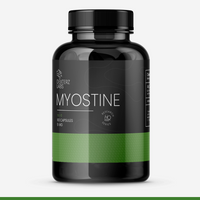
YK-11, YK11 and Myostine: the names
The compound is written YK-11, YK11 and YK 11, and all three mean the same molecule. In the research papers it appears under its full chemical name, (17α,20E)-17,20-[(1-methoxyethylidene)bis(oxy)]-3-oxo-19-norpregna-4,20-diene-21-carboxylic acid methyl ester. Myostine is the name it carries in the Dexterz Labs range. Some sellers describe it simply as a "myostatin inhibitor", a label the evidence below does not support in that form.
What the research found
The primary references are two papers from Kanno and colleagues.
Biological and Pharmaceutical Bulletin, 2011. The first paper characterised YK-11 in cultured cells expressing the androgen receptor, using reporter assays, and reported that it acts as a partial agonist with a transcriptional profile distinct from that of dihydrotestosterone.
Biological and Pharmaceutical Bulletin, 2013. The better known paper used C2C12 cells, a mouse myoblast line that is a standard laboratory model for muscle cell differentiation. In that system YK-11 induced expression of follistatin, a protein that binds and antagonises myostatin, and promoted myogenic differentiation. The authors reported that the differentiation effect appeared to depend on follistatin induction, and that it occurred through a mechanism that differed from that of dihydrotestosterone in the same cells.
This is where the “myostatin inhibitor” description comes from. It is worth being precise about it. YK-11 was not shown to inhibit myostatin directly. It was shown to raise follistatin levels in a mouse myoblast cell line, and follistatin is an endogenous myostatin antagonist. Whether it translates to a person at any achievable exposure has never been tested.
Research since 2018. A small number of further studies have been published, most of them since 2021.
- Bone cells, 2018. Yatsu and colleagues (Biological and Pharmaceutical Bulletin) reported that YK-11 increased the proliferation and differentiation of MC3T3-E1 cells, a mouse osteoblast line.
- Mice, 2021. Lee and colleagues (Biochemical and Biophysical Research Communications) gave YK-11 to mice in a model of bacterial sepsis and reported lower inflammatory markers and lower mortality than in untreated septic mice.
- Rats, 2023 and 2024. Dahleh and colleagues gave YK-11 to rats for five weeks, with and without swimming exercise, and reported increased oxidative stress, mitochondrial dysfunction and inflammation in the hippocampus, with impaired memory consolidation (Journal of Steroid Biochemistry and Molecular Biology; Chemico-Biological Interactions).
- Rats, 2025. Wang and colleagues (Journal of Molecular Endocrinology) reported that YK-11 delivered in a hydrogel promoted repair of skull bone defects in rats, an effect that depended on the androgen receptor.
What still does not exist: any human trial of any phase, any published human data on oral bioavailability, half-life or tissue distribution, and any controlled safety data in people. Cell and animal findings cannot support claims about body composition, strength or safety in people, and this page will not make them.
Side effects reported
There are no human studies, so there is no side effect profile in people. The animal work adds one signal worth knowing. In two rat studies from the same group in Brazil (Dahleh and colleagues, 2023 and 2024), five weeks of YK-11 increased oxidative stress, mitochondrial dysfunction and inflammatory markers in the hippocampus and impaired memory consolidation; swimming exercise alongside it did not reverse most of those changes. Nothing can be stated about hormonal suppression, liver enzymes, lipids or blood pressure in people, because no study has measured them.
Two points can be made honestly. First, YK-11 activates the androgen receptor, and every compound with meaningful androgen receptor activity that has been studied in humans has produced some degree of suppression of endogenous testosterone. It would be surprising if YK-11 did not, but that is inference rather than data. Second, its steroidal, 17-substituted structure resembles that of compounds associated with hepatic strain, and the published case literature on SARM-associated liver injury shows that products in this category do reach clinical attention. Again, this is structural reasoning, not evidence about YK-11 specifically. The absence of data is not the same as evidence of safety, and for YK-11 in people the absence is total.
YK-11 compared with other compounds
Set against Ostarine, which has completed phase III trials, or LGD-4033, which has phase I and phase II data, YK-11 is not in the same evidential tier. It is also structurally different: steroidal rather than non-steroidal, and a partial rather than full receptor agonist. The closest comparisons on evidence are S-23 and ACP-105, which also have rodent data and no human trials, and Cardarine, which has extensive animal data and a well known carcinogenicity finding. The animal record for YK-11 is small, recent and partly concerned with harm, which keeps it at the bottom of the evidence tier among the commonly sold compounds.
| Compound | Structure | Highest evidence | Human data |
|---|---|---|---|
| YK-11 | Steroidal, partial agonist | Cell culture and a few rodent studies | None |
| Ostarine | Non-steroidal | Phase III trials | Yes |
| LGD-4033 | Non-steroidal | Phase I and phase II | Yes |
| RAD-140 | Non-steroidal | Phase I in breast cancer | Limited |
| S-23 | Non-steroidal | Rodent studies | None |
Legal status in the UK, 2026
YK-11 is not listed as a controlled substance under the Misuse of Drugs Act 1971. Its steroidal structure raises a question that does not arise with the non-steroidal SARMs, because Class C of the Act covers anabolic steroids by a combination of named substances and a structural definition, so the classification of any given steroidal research compound can depend on interpretation. Readers should treat the position as less settled than it is for Ostarine or LGD-4033 and check current guidance. Under the Human Medicines Regulations 2012 it is an unlicensed medicinal product if sold or advertised for human use, which the MHRA enforces, and it is therefore supplied in the UK strictly for laboratory research. In sport it falls under the WADA Prohibited List as an anabolic agent and is banned at all times.
YK-11 in anti-doping
Anti-doping laboratories have worked out how YK-11 is broken down so that it can be found in urine. Piper and colleagues identified its urinary metabolites in 2018 (Drug Testing and Analysis), Harding and colleagues described its metabolism in horses for racing control in 2023, and Sobolevsky and colleagues reported YK-11 in a real doping control sample in 2024. Anyone subject to testing in any sport should treat it as prohibited and detectable.
How to check a supplier
For a compound with no analytical reference in routine clinical use, third-party identity testing matters more, not less. Ask for the certificate of analysis matching the batch number on the bottle, showing identity by HPLC or LC-MS and a stated purity figure. Check that the label carries the compound name, milligrams per capsule, capsule count, batch number and a research-only notice. UK manufacture makes the chain of custody short enough to audit. Dexterz Labs YK-11 Myostine is made in the UK at 5 mg per capsule, 90 capsules per bottle, and every batch is independently tested with its certificate of analysis published on the product page.
Frequently asked questions
Is YK-11 a SARM? Not in the usual sense. It is a steroidal partial agonist of the androgen receptor, grouped with SARMs because it is sold alongside them.
Does YK-11 inhibit myostatin? Not directly, on the published evidence. In mouse myoblast cell culture it increased follistatin, which antagonises myostatin. That is an indirect, cell-level finding.
Are there human studies on YK-11? No. There are no published human trials. Since 2018 a few rodent studies and anti-doping metabolism studies have appeared, so the evidence base is cell culture and animals only.
Does YK-11 suppress testosterone? No study has measured it. Compounds with androgen receptor activity generally do, but for YK-11 this is inference, not data.
Why is YK-11 sold at 5 mg per capsule? That is a supplier convention. No published research establishes a dose in people.
Is YK-11 legal in the UK? It is not a named controlled substance, but its steroidal structure makes the position less clear cut than for non-steroidal SARMs. It is an unlicensed medicine if sold for human use, and banned in sport.
Is YK11 the same as YK-11? Yes. YK11, YK 11 and YK-11 are spellings of the same compound, and Myostine is the name it carries in the Dexterz Labs range.
Is YK-11 a steroid? Structurally, yes. It is built on a steroid backbone, which is why it sits apart from Ostarine, LGD-4033 and the other non-steroidal SARMs.
Is YK-11 sold in combination? It is one of the four compounds in the Mass Series capsule, with MK-677, LGD-4033 and RAD-140. No study has tested YK-11 in combination with any other compound.
Has YK-11 been tested in animals? Yes, in a few studies since 2021: a mouse sepsis model, two rat studies of the hippocampus and a rat bone repair study. None of them is a trial in people.
Can YK-11 be detected in drug tests? Yes. Anti-doping laboratories have published methods for its urinary metabolites, and it was reported in a doping control sample in 2024.
Related reading
- LGD-4033 (Ligandrol): the research guide
- RAD-140 (Testolone): what the studies show
- SARMs versus steroids and prohormones
- Third-party testing: how to read a certificate of analysis
- Browse the range: SARMs UK
Research product: Dexterz Labs YK-11 Myostine 5 mg, 90 capsules
Related peptides in the research
Readers comparing SARMs with the peptide literature usually turn to the tissue-repair peptides next: BPC-157 and TB-500, both studied in rodent tendon, ligament and wound models, and the two together in the Wolverine blend. For how the two classes differ in mechanism, evidence and storage, read SARMs vs peptides. Full range: Origin Peptides range.
Sources
- Kanno Y et al., Biol Pharm Bull 2011;34:318-323. PubMed 21372378
- Kanno Y et al., Biol Pharm Bull 2013;36:1460-1465. PubMed 23995658
- Yatsu T et al., Biol Pharm Bull 2018;41:394-398. PubMed 29491216
- Piper T et al., Drug Test Anal 2018;10:1646-1656. PubMed 30379415
- Lee SJ et al., Biochem Biophys Res Commun 2021;543:1-7. PubMed 33588136
- Dahleh MMM et al., J Steroid Biochem Mol Biol 2023;233:106364. PubMed 37468001
- Harding C et al., Drug Test Anal 2023;15:388-407. PubMed 36519889
- Dahleh MMM et al., Chem Biol Interact 2024;394:110971. PubMed 38521455
- Sobolevsky T et al., Drug Test Anal 2024;16:655-660. PubMed 37946705
- Wang R et al., J Mol Endocrinol 2025;74:e240073. PubMed 39660819
- WADA Prohibited List 2026.
No human trials of YK-11 have been published as of October 2026.